
Authored by the expert who managed and guided the team behind the Algeria Property Pack
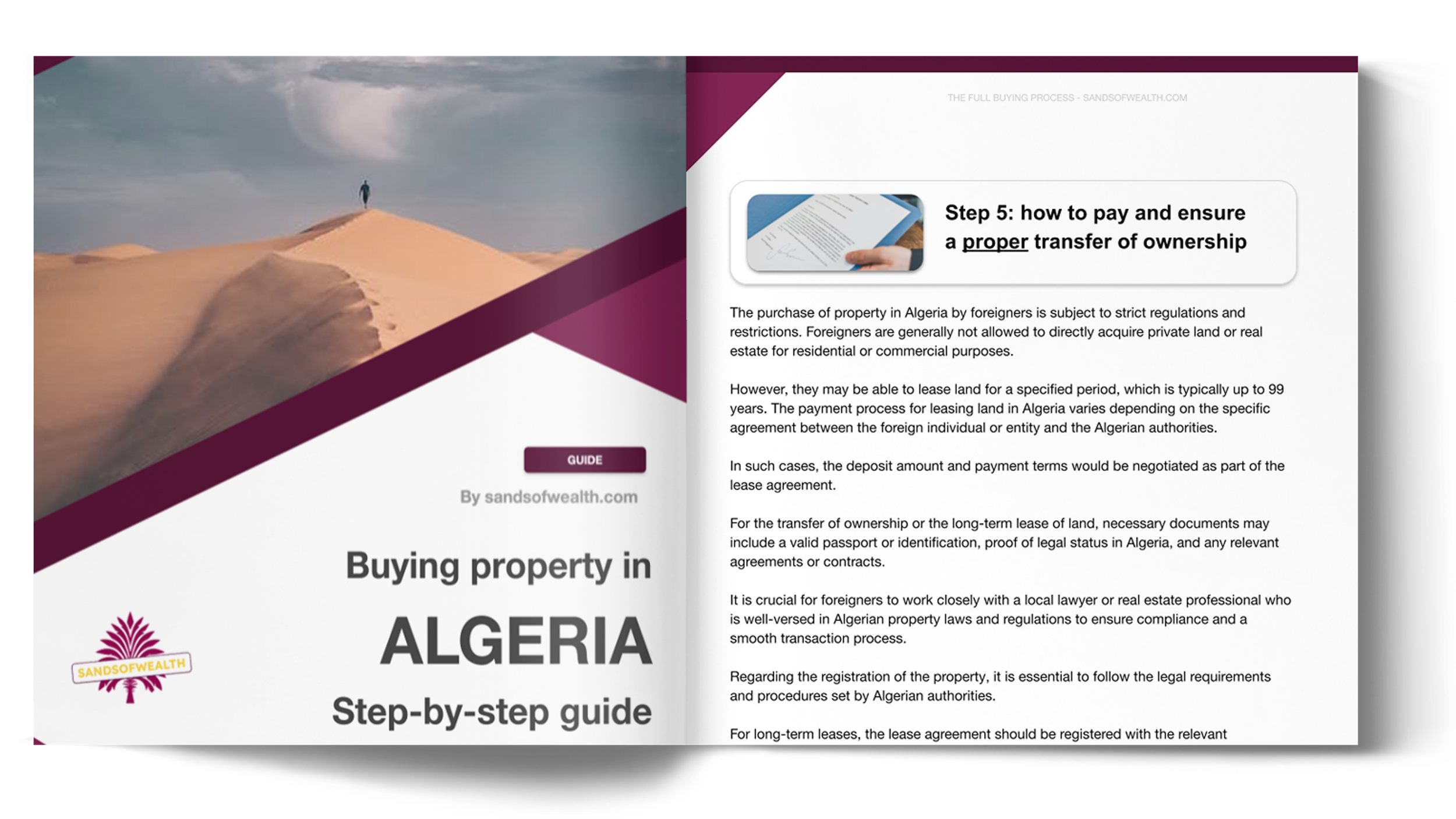
Everything you need to know before buying real estate is included in our Algeria Property Pack
Algeria's rental market offers some of North Africa's most attractive yields, with prime Algiers neighborhoods delivering 6-8% returns as of September 2025. Strong urban migration and limited housing supply in key areas continue to drive investor interest across the country's major cities.
If you want to go deeper, you can check our pack of documents related to the real estate market in Algeria, based on reliable facts and data, not opinions or rumors.
Algeria's rental yields range from 5-10% depending on location and property type, with central Algiers leading at 6-8% and emerging areas like Kabylie reaching up to 10%.
The country's rental market benefits from strong demographic growth, urbanization trends, and increasing foreign investment, particularly in tech-equipped and energy-efficient properties.
| City/Region | Apartment Yields | Average Monthly Rent (2BR) |
|---|---|---|
| Algiers Center | 6-8% | 55,000-90,000 DZD |
| Oran Center | 5-7% | 35,000-60,000 DZD |
| Kabylie Region | 7-10% | 40,000-70,000 DZD |
| Constantine | 5-6% | 30,000-48,000 DZD |
| Annaba | 5-6% | 28,000-45,000 DZD |
| Tlemcen/Béjaïa | 4-6% | 25,000-40,000 DZD |

What's the average rental yield in Algeria right now?
As of September 2025, rental yields for residential properties in Algeria range from 5% to 10%, with the national average sitting between 6-8% for prime locations.
Central Algiers delivers the strongest performance with yields averaging 6-8% in prestigious districts like Hydra, Kouba, and El Madania. These areas benefit from high demand, limited supply, ongoing urbanization, and increasing foreign investment.
The Kabylie region emerges as a standout performer with yields reaching 7-10%, driven by strong tourism demand and limited housing options. This area particularly benefits from urban migration patterns and growing short-term rental opportunities.
Oran, despite being Algeria's second-largest city, shows slightly lower yields at 5-7% due to oversupply from recent developments and increased competition among landlords. However, city center properties in Oran still maintain competitive returns.
It's something we develop in our Algeria property pack.
How does rental yield vary between different cities and neighborhoods?
Rental yield variations across Algeria's cities reflect local supply-demand dynamics and economic factors specific to each market.
Algiers leads with 6-8% yields in central districts, where tech companies and government offices create consistent tenant demand. The capital's neighborhoods like Hydra and El Madania command premium rents due to their proximity to business centers and quality infrastructure.
Oran experiences yield compression at 5-7% as new developments flood the market, creating oversupply conditions. However, established city center properties maintain better performance than suburban developments.
Constantine, Annaba, Tlemcen, and Béjaïa typically offer moderate yields of 4-6%, trailing the major urban centers but providing more affordable entry points for investors.
The Kabylie region stands out with 7-10% yields, benefiting from tourism growth and limited housing stock that creates favorable conditions for both long-term and short-term rentals.
How do yields compare between apartments, houses, and commercial properties?
| Property Type | Algiers Center | Oran Center | Kabylie Region |
|---|---|---|---|
| Apartments | 6-8% | 5-7% | 7-10% |
| Houses | 7-9% | 6-7% | 7-11% |
| Commercial Properties | 5-10% | 4-8% | Location dependent |
| Office Buildings | 6-9% | 5-7% | Variable |
| Retail Spaces | 7-10% | 6-8% | Tourism dependent |
What are the average purchase prices including fees and taxes for different property types?
Property purchase prices in Algeria vary significantly by location, with closing costs adding approximately 4.1% to the total investment.
Algiers commands the highest prices at 180,000-240,000 DZD per square meter for apartments, reflecting its status as the economic and political center. These prices include standard fees and taxes, though new builds may qualify for reduced tax rates.
Oran follows with 150,000-200,000 DZD per square meter, while Constantine offers more affordable options at 140,000-190,000 DZD per square meter. Annaba sits in the middle range at 160,000-210,000 DZD per square meter.
Secondary cities like Tlemcen, Béjaïa, and Sétif provide entry-level opportunities at 18,000-40,000 DZD per square meter, making them attractive for investors seeking higher yields with lower capital requirements.
Closing costs typically reach 4.1% of the property value, covering notary fees, registration taxes, and legal documentation. Some affordable housing schemes and new developments may qualify for reduced fees or tax exemptions.
What are the ongoing costs like maintenance, property taxes, and management fees that affect net yield?
Ongoing property costs in Algeria significantly impact net rental yields and require careful consideration in investment calculations.
Maintenance costs typically range from 1-2% of the property value annually, depending on the building's age, condition, and location. Modern apartments in central Algiers require lower maintenance percentages compared to older properties in secondary cities.
Property taxes average 0.3-0.6% of the assessed property value per year, though exemptions apply for certain housing types and new developments. The government provides tax breaks for affordable housing projects and energy-efficient constructions.
Professional property management fees range from 5-10% of gross rental income, covering tenant screening, rent collection, maintenance coordination, and legal compliance. Self-managed properties eliminate this cost but require significant time investment.
Vacancy losses vary by market conditions, with prime neighborhoods experiencing less than 7% vacancy rates while oversupplied areas like some Oran developments see 12-20% vacancy rates.
Don't lose money on your property in Algeria
100% of people who have lost money there have spent less than 1 hour researching the market. We have reviewed everything there is to know. Grab our guide now.

How does financing with a mortgage impact the real rental yield compared to buying in cash?
Mortgage financing significantly reduces net rental yields in Algeria's current interest rate environment.
Current mortgage rates range from 6-7% annually for 20-year fixed terms, which directly impacts cash-on-cash returns for leveraged investors. These rates, combined with mandatory bank insurance and fees, reduce actual yields by 1-2% compared to cash purchases.
Cash buyers achieve higher net yields by avoiding monthly interest payments and benefiting directly from property appreciation. In central Algiers where properties appreciate 7% annually, cash buyers capture the full benefit while leveraged investors pay significant interest costs.
Leveraged investors face additional costs including loan origination fees, mandatory property insurance, and potential early repayment penalties. These factors compound the yield reduction beyond the basic interest rate impact.
However, financing allows investors to control more properties with less capital, potentially increasing overall portfolio returns despite lower individual property yields.
What are example monthly rents for different property types and sizes?
| Property Type/Size | Algiers (DZD/month) | Oran (DZD/month) | Constantine (DZD/month) |
|---|---|---|---|
| 1 Bedroom Apartment | 40,000-65,000 | 28,000-45,000 | 25,000-35,000 |
| 2 Bedroom Apartment | 55,000-90,000 | 35,000-60,000 | 30,000-48,000 |
| 3 Bedroom Apartment | 70,000-120,000 | 50,000-95,000 | 40,000-75,000 |
| 3 Bedroom House | 110,000-180,000 | 85,000-140,000 | 50,000-105,000 |
| Commercial Space | Varies widely | Varies widely | Varies widely |
What's the typical renter profile in Algeria, and how does that affect demand?
Algeria's rental market serves diverse tenant profiles that create distinct demand patterns across different property types and locations.
Young professionals dominate rental demand in Algiers, particularly seeking tech-equipped and energy-efficient apartments near business districts. This demographic drives premium rents for modern properties with reliable internet and power systems.
Expatriates and foreign workers increasingly concentrate in business districts of Algiers and Oran, attracted by foreign investment projects and international companies. These tenants typically pay higher rents and prefer furnished, well-located properties.
Family renters seek larger apartments or houses, especially in suburban areas where they can access better schools and outdoor spaces. This segment shows strong preference for properties with parking and family-friendly amenities.
Tourists and short-term renters create seasonal demand spikes in Kabylie, coastal cities, and central Algiers, driving higher yields for Airbnb-style properties during peak seasons.
It's something we develop in our Algeria property pack.

We did some research and made this infographic to help you quickly compare rental yields of the major cities in Algeria versus those in neighboring countries. It provides a clear view of how this country positions itself as a real estate investment destination, which might interest you if you're planning to invest there.
What are the current vacancy rates by area and property type?
Vacancy rates in Algeria's rental market vary dramatically by location and property type, directly impacting investor returns.
Prime neighborhoods in central Algiers maintain vacancy rates below 7% for long-term rentals, reflecting strong demand from professionals and expatriates. These areas benefit from proximity to employment centers and quality infrastructure.
Oversupplied markets like certain Oran developments experience vacancy rates of 12-20%, particularly affecting newer suburban projects that lack tenant amenities or convenient locations.
Short-term rental properties show different patterns, with central Algiers Airbnb properties achieving 53% median occupancy rates, while lower-tier properties drop to 33% occupancy. Draria, a suburban area, shows 39% median occupancy for quality properties but only 23% for entry-level accommodations.
The Kabylie region maintains low vacancy rates for both long-term and short-term rentals due to limited supply and growing tourism demand.
How do returns differ between short-term rentals like Airbnb and long-term rentals?
Short-term and long-term rental strategies in Algeria offer distinct risk-return profiles that appeal to different investor preferences.
Short-term rentals in central Algiers and Kabylie can achieve gross yields up to 2% higher than long-term rentals when professionally managed, reaching 9-10% during peak seasons in prime locations.
However, short-term rentals require significantly higher management intensity, including guest communication, cleaning services, and property maintenance. These additional costs can reduce net yields by 2-3% compared to gross returns.
Long-term rentals provide more stable returns at 6-8% in prime areas, with lower turnover costs and reduced management requirements. These properties offer predictable cash flow and easier financing options.
Seasonal variations significantly impact short-term rental performance, with properties experiencing sharp yield drops during off-peak periods or economic downturns that affect tourism.
The choice between strategies depends on investor involvement capacity, risk tolerance, and local regulations affecting short-term rental operations.
How have average rents and yields changed compared to one year ago and five years ago?
Algeria's rental market has shown strong growth momentum over recent years, with varying performance across different cities and property types.
Algiers experienced 7.2% price appreciation in 2024, with rental yields remaining stable or increasing slightly by 0.5-1% as tight rental market conditions supported rent growth alongside property values.
Oran saw dramatic 24.9% year-over-year price increases in 2024, but yields actually declined as new supply surged faster than rental demand could absorb the additional units.
Kabylie region yields increased by 1-2% in 2024-2025, driven by limited new housing construction and strong migration from rural areas seeking urban amenities and employment opportunities.
Over the five-year period, prime city center yields grew by 0.5-2% as demographic growth, urbanization trends, and infrastructure investment supported rental market fundamentals. Outlying neighborhoods and smaller towns experienced flat or slightly declining yields.
It's something we develop in our Algeria property pack.
What are the smartest property investment choices today, and how do yields compare with other big cities in the region over the next 1, 5, and 10 years?
The smartest property investment opportunities in Algeria center on specific property types and locations that align with demographic and economic trends.
Central Algiers apartments in districts like Hydra, Kouba, and El Madania represent the most stable investment choice, offering consistent 6-8% yields with strong price appreciation potential and reliable tenant demand.
Tech-equipped, energy-efficient apartments across major cities are leading appreciation trends and attracting high-quality tenants willing to pay premium rents for modern amenities and reliable utilities.
Kabylie region properties, particularly those suitable for both long-term and short-term rentals, offer compelling opportunities with current yields of 7-10% and strong projected demand growth from tourism and urban migration.
Suburban family properties with outdoor spaces and parking are increasingly sought after by young families, offering robust appreciation potential as Algeria's middle class expands.
1. **Next 1 Year:** Algeria's prime locations are forecast to deliver 3-5% price growth with stable yields2. **Next 5 Years:** Annual growth of 3-7% expected in prime neighborhoods with yields stabilizing or slowly increasing 3. **Next 10 Years:** Long-term growth supported by demographic trends and infrastructure development4. **Regional Comparison:** Algeria's yields in Algiers rival major regional cities while offering better affordability than Morocco's Casablanca or Tunisia's Tunis5. **Competitive Advantage:** Lower entry costs combined with strong yields make Algeria attractive versus higher-priced regional marketsConclusion
This article is for informational purposes only and should not be considered financial advice. Readers are advised to consult with a qualified professional before making any investment decisions. We do not assume any liability for actions taken based on the information provided.
Algeria's rental market offers compelling opportunities for informed investors, with prime locations delivering competitive yields and strong growth prospects.
Success requires careful attention to location selection, property type, and understanding local market dynamics that drive tenant demand and rental growth.