
Authored by the expert who managed and guided the team behind the Algeria Property Pack
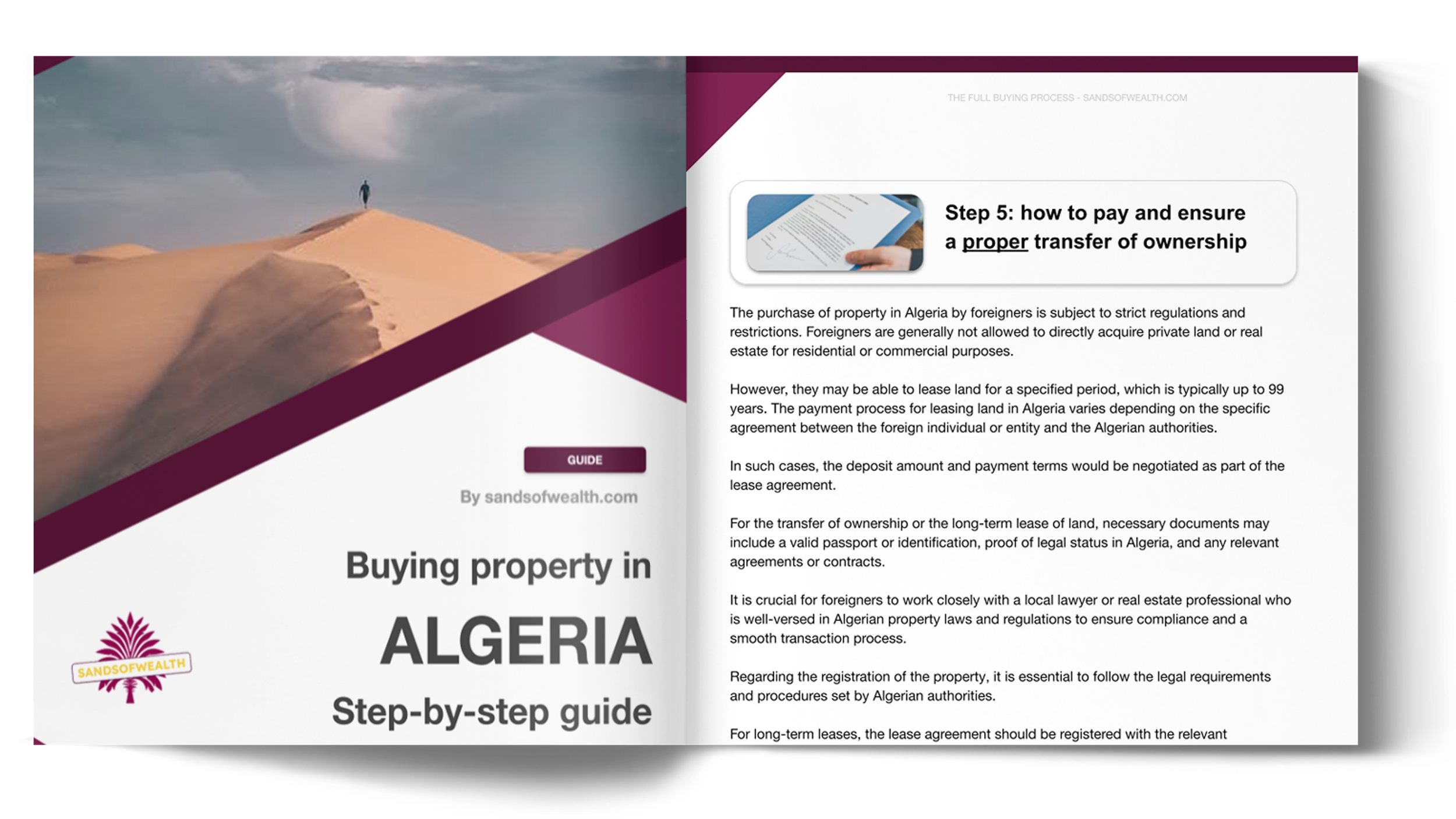
Everything you need to know before buying real estate is included in our Algeria Property Pack
If you're looking to rent or invest in Algeria, you're probably wondering what rents actually look like across different cities and neighborhoods in 2026.
This article breaks down current rental prices in Algeria, from studios to 2-bedroom apartments, and covers everything from neighborhood trends to landlord costs.
We update this blog post regularly to keep the numbers fresh and relevant for you.
And if you're planning to buy a property in this place, you may want to download our pack covering the real estate market in Algeria.
Insights
- Rents in Algiers can be two to three times higher than in Constantine or Annaba for the same apartment size, making city choice the biggest cost factor in Algeria.
- Furnished apartments in prime Algiers districts like Hydra or El Biar command a 10% to 30% premium over unfurnished units, attracting expats and corporate tenants.
- Algeria uses the F1/F2/F3 system for apartment sizes, where F1 means studio, F2 means 1-bedroom, and F3 means 2-bedroom.
- The average vacancy rate in Algeria's private rental market sits around 6% to 9%, but prime Algiers neighborhoods can be as tight as 4% to 7%.
- Rent growth in Algeria in 2026 is projected at 2% to 6% nationally, with Algiers leading due to concentrated job demand.
- Properties near universities like Bab Ezzouar in Algiers or Ali Mendjeli in Constantine rent faster, often within 10 to 20 days.
- Peak tenant demand in Algeria typically hits between August and October, driven by university semesters and job relocations.
- Landlords in Algeria usually pay building charges and common area maintenance, while tenants cover electricity, gas, and water bills.

What are typical rents in Algeria as of 2026?
What's the average monthly rent for a studio in Algeria as of 2026?
As of January 2026, the average monthly rent for a studio apartment in Algeria is around 25,000 DZD, which works out to roughly $185 USD or €170 EUR.
That said, the realistic range is quite wide: studios in Algeria typically rent between 15,000 DZD ($110 USD or €100 EUR) in smaller cities like Constantine or Annaba, and up to 60,000 DZD ($445 USD or €415 EUR) in prime Algiers neighborhoods.
The main factors that cause studio rents to vary in Algeria are location (Algiers is far more expensive than interior cities), the condition and age of the building, and whether the unit is furnished or unfurnished.
What's the average monthly rent for a 1-bedroom in Algeria as of 2026?
As of January 2026, the average monthly rent for a 1-bedroom apartment (called F2 locally) in Algeria is around 35,000 DZD, equivalent to about $260 USD or €240 EUR.
In practice, 1-bedroom rents in Algeria range from about 20,000 DZD ($150 USD or €140 EUR) in cities like Constantine or Annaba to 90,000 DZD ($665 USD or €620 EUR) in sought-after Algiers districts.
For the cheapest 1-bedroom rents in Algeria, look at neighborhoods in Constantine, Annaba, or the eastern suburbs of Algiers, while the highest rents cluster in western Algiers neighborhoods like Hydra, El Biar, and Dely Brahim.
What's the average monthly rent for a 2-bedroom in Algeria as of 2026?
As of January 2026, the average monthly rent for a 2-bedroom apartment (F3) in Algeria is approximately 50,000 DZD, or around $370 USD and €345 EUR.
The realistic range for 2-bedroom apartments in Algeria spans from about 30,000 DZD ($220 USD or €205 EUR) in smaller cities to 130,000 DZD ($960 USD or €895 EUR) or more in premium Algiers locations.
The cheapest 2-bedroom rents in Algeria are found in Constantine, Annaba, and less central Algiers communes, while the most expensive ones are in Hydra, El Biar, Chéraga, and the coastal areas of Staoueli and Zéralda.
By the way, you will find much more detailed rent ranges in our property pack covering the real estate market in Algeria.
What's the average rent per square meter in Algeria as of 2026?
As of January 2026, the average rent per square meter in Algeria is around 500 DZD per month, which translates to roughly $3.70 USD or €3.45 EUR per square meter.
Across different neighborhoods in Algeria, rent per square meter ranges from about 350 DZD ($2.60 USD or €2.40 EUR) in Constantine or Annaba to 1,400 DZD ($10.35 USD or €9.65 EUR) in central and western Algiers districts.
Compared to other major Algerian cities, Algiers has the highest rent per square meter, often double or triple what you would pay in Oran, and several times more than in Constantine or Annaba.
Properties that push rent per square meter above average in Algeria typically feature secure residence access, assigned parking, air conditioning, modern kitchens, and locations in prestigious districts like Hydra or El Biar.
How much have rents changed year-over-year in Algeria in 2026?
As of January 2026, rents in Algeria's major cities have increased by an estimated 3% to 6% year-over-year, with smaller cities seeing more modest growth of 0% to 3%.
The main factors driving rent changes in Algeria this year are steady demand in Algiers and Oran due to job concentration, combined with limited supply in the most requested neighborhoods.
This year's rent increase in Algeria is relatively moderate compared to previous years, thanks to contained national inflation which has kept landlords from pushing rents too aggressively without risking vacancies.
What's the outlook for rent growth in Algeria in 2026?
As of January 2026, rent growth in Algeria is projected to be modest at around 2% to 6% nationally, with Algiers expected to see the higher end of that range.
The key factors likely to influence rent growth in Algeria over the coming year include the concentration of formal employment in Algiers and Oran, limited premium housing supply, and the overall inflation environment.
Neighborhoods in Algeria expected to see the strongest rent growth are western Algiers districts like Hydra, El Biar, Chéraga, and Dely Brahim, as well as Akid Lotfi in Oran.
The main risks that could cause rent growth in Algeria to differ from projections include unexpected inflation spikes, changes in government housing policy, or economic slowdowns that reduce tenant purchasing power.

We have made this infographic to give you a quick and clear snapshot of the property market in Algeria. It highlights key facts like rental prices, yields, and property costs both in city centers and outside, so you can easily compare opportunities. We’ve done some research and also included useful insights about the country’s economy, like GDP, population, and interest rates, to help you understand the bigger picture.
Which neighborhoods rent best in Algeria as of 2026?
Which neighborhoods have the highest rents in Algeria as of 2026?
As of January 2026, the neighborhoods with the highest rents in Algeria are Hydra, El Biar, and Ben Aknoun in Algiers, where 2-bedroom apartments can easily exceed 100,000 DZD ($740 USD or €690 EUR) per month.
These neighborhoods command premium rents in Algeria because they offer embassy proximity, secure residential compounds, good road access, and a concentration of upscale housing stock.
The tenant profiles that typically rent in these high-rent Algerian neighborhoods include senior professionals, diplomats, expats, and executives working for international companies or government institutions.
By the way, we've written a blog article detailing what are the current best areas to invest in property in Algeria.
Where do young professionals prefer to rent in Algeria right now?
The top three neighborhoods where young professionals prefer to rent in Algeria are Hydra and El Biar for those with higher budgets, and Kouba or Hussein Dey for more affordable options in Algiers.
Young professionals in these Algerian neighborhoods typically pay between 40,000 DZD ($295 USD or €275 EUR) and 80,000 DZD ($590 USD or €550 EUR) per month for a 1-bedroom or small 2-bedroom apartment.
The amenities and lifestyle features that attract young professionals to these Algerian neighborhoods include shorter commutes to business districts, modern apartment buildings, cafes, and proximity to services and nightlife.
By the way, you will find a detailed tenant analysis in our property pack covering the real estate market in Algeria.
Where do families prefer to rent in Algeria right now?
The top three neighborhoods where families prefer to rent in Algeria are Ben Aknoun, Chéraga, and Dely Brahim in Algiers, along with Bir El Djir in Oran.
Families in these Algerian neighborhoods typically pay between 60,000 DZD ($445 USD or €415 EUR) and 120,000 DZD ($890 USD or €825 EUR) per month for 2-3 bedroom apartments.
The features that make these neighborhoods attractive to families in Algeria include larger apartment sizes, quieter streets, parking availability, green spaces, and proximity to schools.
Top-rated schools and educational options near these family-friendly Algerian neighborhoods include international schools in Hydra and Ben Aknoun, as well as well-regarded public schools in Chéraga and Dely Brahim.
Which areas near transit or universities rent faster in Algeria in 2026?
As of January 2026, the top three areas near transit or universities that rent fastest in Algeria are Bab Ezzouar in Algiers, central Algiers (Sidi M'Hamed area), and Ali Mendjeli (Nouvelle Ville) in Constantine.
Properties in these high-demand Algerian areas typically stay listed for only 10 to 20 days, compared to 30 days or more in less central locations.
The typical rent premium for properties within walking distance of transit or universities in Algeria is around 5,000 to 15,000 DZD ($35 to $110 USD or €35 to €100 EUR) more per month than similar units farther away.
Which neighborhoods are most popular with expats in Algeria right now?
The top three neighborhoods most popular with expats in Algeria are Hydra, El Mouradia, and El Biar in Algiers, along with Akid Lotfi in Oran.
Expats in these Algerian neighborhoods typically pay between 70,000 DZD ($520 USD or €480 EUR) and 150,000 DZD ($1,110 USD or €1,035 EUR) per month, often for furnished apartments.
The features that make these neighborhoods attractive to expats in Algeria include secure compounds, furnished units, proximity to embassies and international services, and reliable utilities.
The nationalities and expat communities most represented in these Algerian neighborhoods include French, Chinese, Turkish, and Gulf Arab professionals working in energy, construction, and diplomatic sectors.
And if you are also an expat, you may want to read our exhaustive guide for expats in Algeria.
Get fresh and reliable information about the market in Algeria
Don't base significant investment decisions on outdated data. Get updated and accurate information with our guide.

Who rents, and what do tenants want in Algeria right now?
What tenant profiles dominate rentals in Algeria?
The top three tenant profiles that dominate the rental market in Algeria are urban professionals (especially in Algiers and Oran), newly married couples forming households, and students or early-career renters near universities.
Urban professionals represent roughly 40% to 50% of the private rental market in Algeria's major cities, while new households and students each make up about 20% to 30%.
Urban professionals in Algeria typically seek modern F2 or F3 apartments in well-connected neighborhoods, new households often look for affordable F2 units, and students gravitate toward studios or shared F3 apartments near campuses.
If you want to optimize your cashflow, you can read our complete guide on how to buy and rent out in Algeria.
Do tenants prefer furnished or unfurnished in Algeria?
In Algeria, roughly 70% to 80% of long-term tenants prefer unfurnished apartments, while the remaining 20% to 30% (mostly expats and short-term renters) prefer furnished units.
The typical rent premium for furnished apartments in Algeria is around 10% to 30% higher than unfurnished units, adding roughly 5,000 to 20,000 DZD ($35 to $150 USD or €35 to €140 EUR) per month depending on location and quality.
The tenant profiles that tend to prefer furnished rentals in Algeria include expats, corporate transferees, and professionals on temporary assignments who value move-in-ready convenience.
Which amenities increase rent the most in Algeria?
The top five amenities that increase rent the most in Algeria are secure residence access with a guard, assigned parking (especially underground), air conditioning, modern kitchens with good ventilation, and reliable hot water systems.
In Algeria, secure residence access can add 5,000 to 15,000 DZD ($35 to $110 USD) per month, parking adds 3,000 to 10,000 DZD ($20 to $75 USD), and air conditioning can add 5,000 to 12,000 DZD ($35 to $90 USD) to monthly rent.
In our property pack covering the real estate market in Algeria, we cover what are the best investments a landlord can make.
What renovations get the best ROI for rentals in Algeria?
The top five renovations that get the best ROI for rental properties in Algeria are kitchen upgrades, bathroom modernization, air conditioning installation, security improvements (door, locks, intercom), and fresh paint with minor cosmetic fixes.
In Algeria, a kitchen refresh typically costs 100,000 to 300,000 DZD ($740 to $2,220 USD) and can increase rent by 5,000 to 10,000 DZD monthly, while AC installation costs around 80,000 to 150,000 DZD ($590 to $1,110 USD) and adds 5,000 to 12,000 DZD to rent.
Renovations that tend to have poor ROI in Algeria and should be avoided include luxury finishes that exceed neighborhood standards, swimming pool additions in non-premium areas, and overly custom designs that limit tenant appeal.

We did some research and made this infographic to help you quickly compare rental yields of the major cities in Algeria versus those in neighboring countries. It provides a clear view of how this country positions itself as a real estate investment destination, which might interest you if you’re planning to invest there.
How strong is rental demand in Algeria as of 2026?
What's the vacancy rate for rentals in Algeria as of 2026?
As of January 2026, the estimated vacancy rate for private rental properties in Algeria is around 6% to 9% in urban areas.
Across different neighborhoods in Algeria, vacancy rates range from as low as 4% to 7% in prime Algiers districts like Hydra and El Biar, to 8% to 12% in smaller cities and less central areas.
The current vacancy rate in Algeria is relatively stable compared to historical averages, reflecting steady demand in major cities but some softness in secondary markets.
Finally please note that you will have all the indicators you need in our property pack covering the real estate market in Algeria.
How many days do rentals stay listed in Algeria as of 2026?
As of January 2026, the average number of days rentals stay listed in Algeria is approximately 20 to 35 days for typical urban properties.
Across different property types and neighborhoods in Algeria, days on market range from 10 to 20 days for well-priced units in prime areas like Hydra or Akid Lotfi, to 45 days or more for overpriced or poorly located properties.
The current days-on-market figure in Algeria is similar to one year ago, indicating stable absorption rates in the rental market without major shifts in tenant demand.
Which months have peak tenant demand in Algeria?
The peak months for tenant demand in Algeria are typically August through October, followed by January through February, and then May through June.
The factors driving seasonal demand in Algeria include university semester start dates in September, corporate and government job relocations in early fall, and household formation patterns around the new year and early summer.
The months with the lowest tenant demand in Algeria are generally November through December and March through April, when school and work calendars create fewer relocation triggers.
Buying real estate in Algeria can be risky
An increasing number of foreign investors are showing interest. However, 90% of them will make mistakes. Avoid the pitfalls with our comprehensive guide.

What will my monthly costs be in Algeria as of 2026?
What property taxes should landlords expect in Algeria as of 2026?
As of January 2026, the typical annual property tax for landlords in Algeria is relatively low compared to rent income, often ranging from 5,000 to 20,000 DZD ($35 to $150 USD or €35 to €140 EUR) for a standard apartment.
The realistic range of annual property taxes in Algeria depends on property value and location, spanning from under 5,000 DZD in smaller cities to 30,000 DZD or more ($220 USD or €205 EUR) for larger or more valuable properties in Algiers.
Property taxes in Algeria are calculated based on the rental value of the property, with rates set by local authorities, and the bigger tax concern for most landlords is actually the tax on rental income rather than the holding tax.
Please note that, in our property pack covering the real estate market in Algeria, we cover what exemptions or deductions may be available to reduce property taxes for landlords.
What maintenance budget per year is realistic in Algeria right now?
The estimated realistic annual maintenance budget for a typical rental property in Algeria is around 1% to 2% of property value, or roughly 50,000 to 150,000 DZD ($370 to $1,110 USD or €345 to €1,035 EUR) per year for a mid-range apartment.
The realistic range of annual maintenance costs in Algeria depends on property age and condition, from about 30,000 DZD ($220 USD) for newer buildings to 200,000 DZD ($1,480 USD) or more for older properties needing frequent repairs.
Landlords in Algeria typically set aside 5% to 10% of rental income for maintenance, which covers small repairs, building charges (copropriété), and occasional larger fixes.
What utilities do landlords often pay in Algeria right now?
The utilities landlords most commonly pay in Algeria are building-level charges (copropriété fees for common area maintenance), and sometimes internet if the unit is offered furnished.
Building charges in Algeria typically cost landlords around 2,000 to 8,000 DZD ($15 to $60 USD or €14 to €55 EUR) per month, while internet (if included) adds another 3,000 to 5,000 DZD ($20 to $35 USD).
The common practice in Algeria is for tenants to pay electricity and gas bills directly to Sonelgaz, and water bills to providers like SEAAL in Algiers, while landlords cover shared building costs.
How is rental income taxed in Algeria as of 2026?
As of January 2026, rental income in Algeria is subject to taxation, with landlords required to declare their rental earnings and pay tax according to the applicable rate structure.
The main deductions landlords can claim against rental income in Algeria include maintenance expenses, building charges, and certain repair costs, though documentation and compliance with tax administration rules are essential.
A common tax mistake landlords in Algeria should avoid is failing to properly declare rental income, especially when renting informally, as the tax administration has been increasing enforcement and penalties can be significant.
We cover these mistakes, among others, in our list of risks and pitfalls people face when buying property in Algeria.

We made this infographic to show you how property prices in Algeria compare to other big cities across the region. It breaks down the average price per square meter in city centers, so you can see how cities stack up. It’s an easy way to spot where you might get the best value for your money. We hope you like it.
What sources have we used to write this blog article?
Whether it's in our blog articles or the market analyses included in our property pack about Algeria, we always rely on the strongest methodology we can … and we don't throw out numbers at random.
We also aim to be fully transparent, so below we've listed the authoritative sources we used, and explained how we used them and the methods behind our estimates.
| Source | Why it's authoritative | How we used it |
|---|---|---|
| Bank of Algeria (Daily Exchange Rates) | This is Algeria's central bank, providing official exchange rates used for all currency conversions. | We used it to convert dinar-denominated rents into USD and EUR equivalents. We also ensured all currency conversions were consistent as of January 2026. |
| World Bank Data (CPI Inflation Algeria) | This is a widely used international dataset with transparent sourcing from IMF and national statistics. | We used it to anchor the inflation backdrop behind rent growth projections. We also used it to triangulate against local inflation releases. |
| IMF Algeria 2025 Article IV Report | This is the IMF's primary source for Algeria's macroeconomic outlook and reform context. | We used it to ground the 2026 rent outlook in mainstream economic assumptions. We also used it to avoid relying on opinion-based commentary. |
| Ministry of Housing (MHUV) | This is Algeria's official housing ministry, explaining public rental programs and OPGI structures. | We used it to explain why rents vary sharply between private market and public housing. We also used it to frame neighborhood demand patterns. |
| Journal Officiel (JORADP) | This is Algeria's official gazette where all binding laws and regulations are published. | We used it to support the rules and taxes section with official legal references. We also used it to validate that regulatory information traces back to gazetted texts. |
| Ouedkniss | This is one of Algeria's largest listing marketplaces with high volumes of asking rents across all cities. | We used it to build a January 2026 snapshot of asking rents by unit type and neighborhood. We then calculated medians and trimmed averages to establish typical ranges. |
| Lkeria | This is a major Algeria-focused real estate portal with many agency listings and standardized data. | We used it to cross-check Ouedkniss asking rents and reduce single-platform bias. We also used it to confirm typical sizes (square meters) attached to rent levels. |
| Lamacta Immobilier | This is a local Oran real estate operator with detailed listings including rent, size, and furnishing. | We used it as a detail-rich cross-check for Oran pricing in premium districts like Akid Lotfi. We also used it to validate the furnished premium discussion. |
| SEAAL (Algiers Water Utility) | This is the official water and sewer operator for Algiers and Tipasa regions. | We used it to explain which utility bills tenants typically handle. We also used it to keep the monthly costs section grounded in real operators. |
| Sonelgaz | This is Algeria's national electricity and gas utility group. | We used it to anchor the utilities section regarding billing responsibility. We also used it to explain how electricity and gas costs factor into rental negotiations. |
| Algerie Eco (ONS Inflation Report) | This is a mainstream outlet that explicitly quotes official ONS inflation releases. | We used it to triangulate inflation direction going into 2026 when official PDFs were inaccessible. We also used it to keep our rent-growth narrative fact-based. |
| ONS (Office National des Statistiques) | This is Algeria's official statistics office that publishes CPI and economic data. | We used it to validate that CPI releases exist and are published regularly. We also used it as the authoritative "source of truth" link for inflation data. |
| World Bank (French Mirror) | This is the same World Bank dataset in French, useful for easier quoting and cross-referencing. | We used it as an alternate access point for the CPI series. We also used it to cross-check annual inflation framing. |
| Bank of Algeria (Exchange Rate Hub) | This is the central bank's official portal for exchange rate information. | We used it to verify we were citing official interbank rates, not street rates. We also used it to validate the right pages for exchange-rate context. |
Get the full checklist for your due diligence in Algeria
Don't repeat the same mistakes others have made before you. Make sure everything is in order before signing your sales contract.